2026-10-24 ·
How to Spot Creosote Buildup in Your Murphy Fireplace
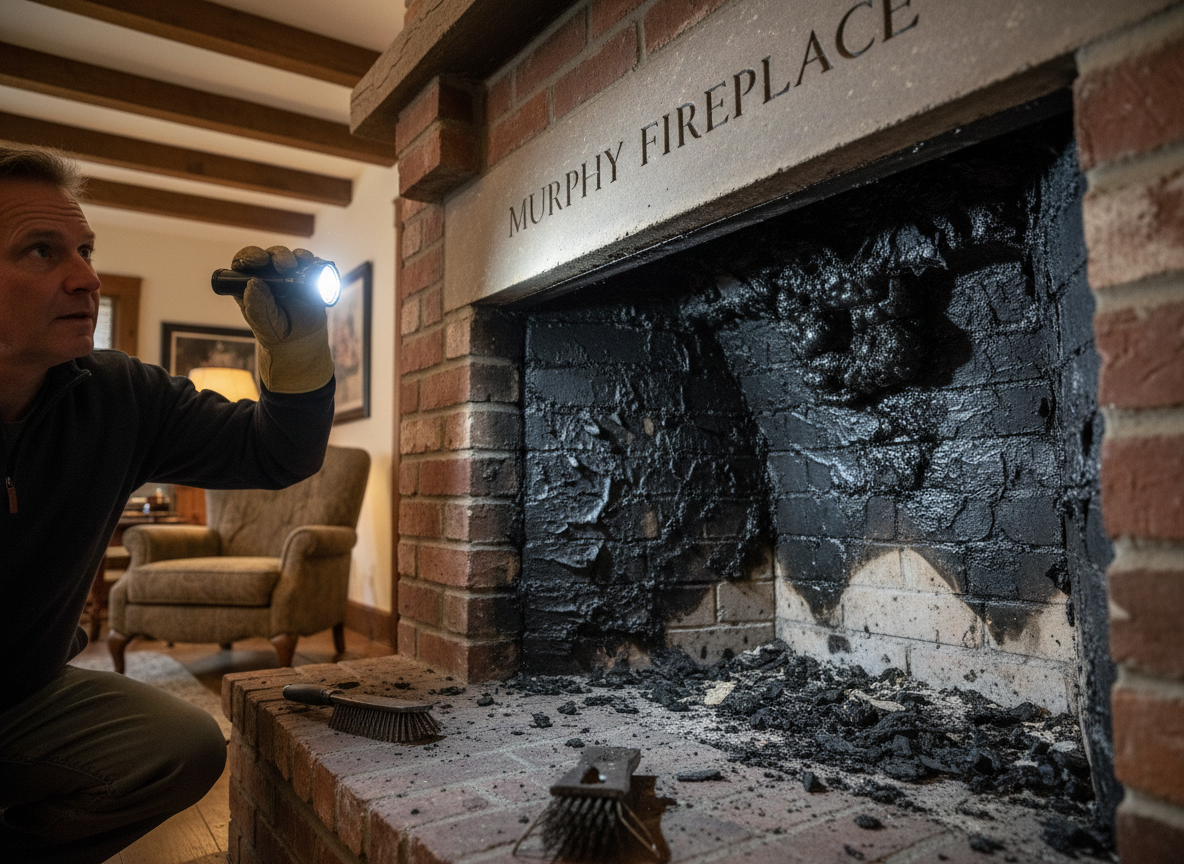
Creosote buildup in a Murphy fireplace typically shows as a glossy black or brown coating on flue walls after 6-10 fires during humid months, reducing draft efficiency and raising chimney fire risk in Collin County homes.
Visual Signs of Creosote Layers
Homeowners in The Pavilions and Rolling Ridge often notice a shiny, sticky residue on the smoke chamber or damper when they shine a flashlight upward. Early stages form a thin, flaky film that feels tacky to the touch, while advanced buildup creates 1/8-inch or thicker crusts that flake off in chunks. In older brick chimneys common around Breckinridge Park, the substance clings to mortar joints and can stain the firebox walls. Check after the fire cools completely and use a mirror on an extension pole to view the flue interior without climbing. These visual cues differ from simple soot because creosote feels oily rather than powdery. Regular checks help catch the problem before it hardens into the third-stage glassy form that requires more aggressive removal.
Odor and Draft Changes in Local Conditions
Murphy's hot humid summers followed by mild winters with severe storms push homeowners to burn more frequently, which speeds creosote formation. A persistent smoky smell in the living room even when the fireplace is cold often signals heavy buildup inside the flue. Draft problems appear as smoke rolling back into the room during startup or when winds from nearby Plano push against the chimney top. In Breeze Hill homes with taller chimneys, reduced airflow becomes noticeable after storms dump extra moisture that mixes with the tarry deposits. Residents report the odor intensifying during humidity spikes above 70 percent, a common Collin County pattern. These sensory clues usually precede visible flakes and prompt many to schedule a closer look before the next cold snap.
Safe Inspection Steps for Murphy Fireplaces
Start by ensuring the firebox is completely cold and the damper is open. Use a bright LED headlamp and a chimney inspection mirror to scan the first 4-6 feet of flue from the firebox. Wear gloves and avoid touching the walls directly if residue appears wet. Note any narrowing of the flue opening caused by layered deposits, especially in prefabricated units found in newer Rolling Ridge construction. Avoid using brooms or brushes that could dislodge material onto the hearth. Document findings with photos for later comparison after a few more burns. These steps reveal buildup levels without special equipment and help decide whether a professional assessment is warranted before winter returns.
When to Schedule Professional Evaluation
If the coating exceeds 1/8 inch or draft issues persist, contact a local service for a full chimney inspection service. Technicians use video cameras to measure depth throughout the entire flue, something homeowners cannot safely do from ground level. In Collin County, where occasional storms drive rain into uncapped chimneys, buildup often combines with moisture to accelerate deterioration. Many Murphy residents combine this check with chimney cleaning service to remove the creosote before it reaches dangerous thickness. The process typically takes 1-2 hours and restores proper airflow. For cost expectations in the region, see What Chimney Repair Typically Costs in Collin County. Addressing buildup early prevents emergency calls during the first cold front.