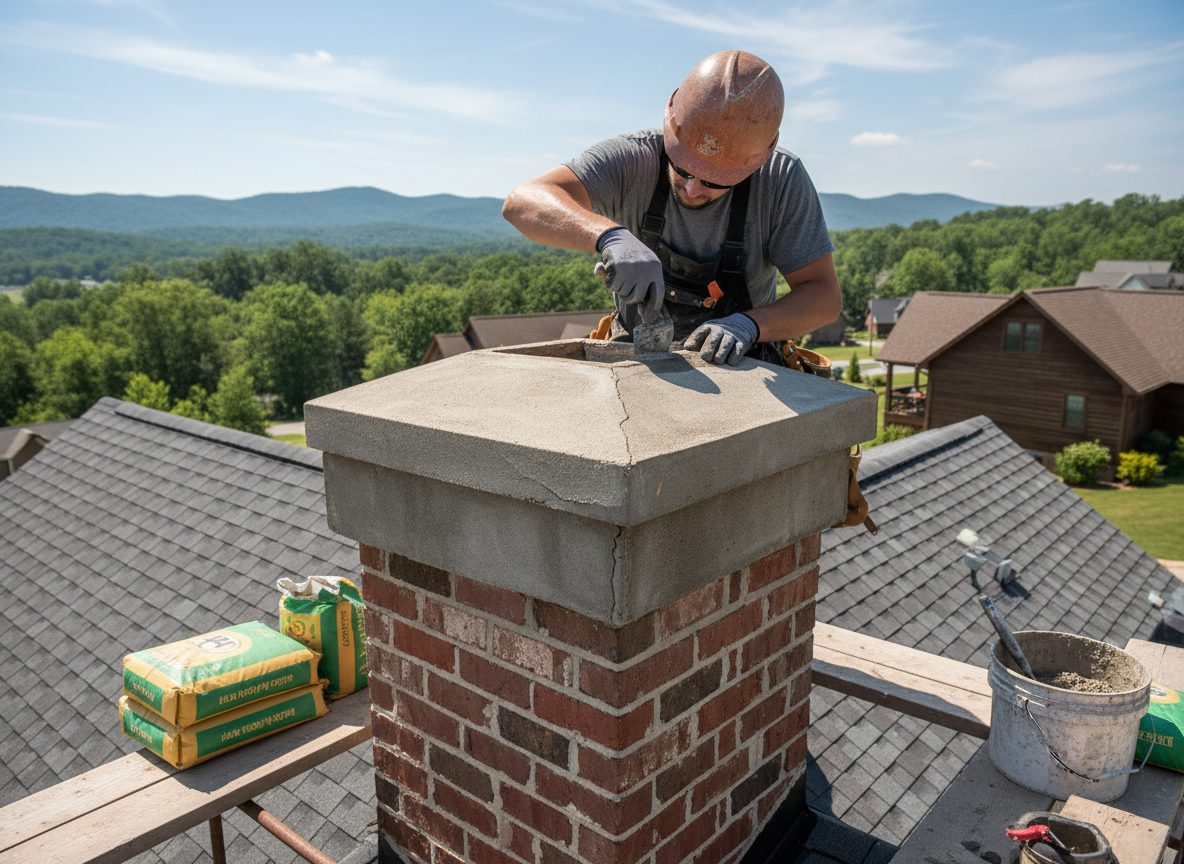
Murphy homes built in the last thirty years sit on clay-heavy soils that shift slightly after heavy rains, stressing masonry crowns on chimneys serving fireplaces in Breeze Hill and Rolling Ridge neighborhoods. A cracked crown lets rainwater reach the flue liner, and the hot humid summers that follow speed spalling on the brick. We mix a high-strength, fiber-reinforced mortar matched to the original cap profile so the new crown expands and contracts with the mild winter temperature swings without telegraphing new cracks.
Severe thunderstorms that roll through Collin County can drop hail and wind-driven rain that erodes the crown edges first. Homeowners in The Pavilions often notice staining on the firebox ceiling only after the damage has reached the attic. Our repair includes a positive slope away from the flue opening and a drip edge that directs water past the brickwork, reducing the chance of future saturation during the next storm season.
We also inspect the flashing where the crown meets the roof deck, because many Murphy roofs were installed with standard step flashing that does not account for the extra movement caused by the area’s occasional freeze-thaw cycles. Replacing or resealing that junction at the same time prevents leaks that would otherwise appear months later inside the home.
All work is performed from the roof so interior finishes stay untouched. We leave the site broom-clean and provide a written description of the mortar mix and slope details for the homeowner’s records.
Technician insight
In Murphy, the thing that catches most people out with chimney crown repair is how the clay soils under Rolling Ridge and The Pavilions hold water after a storm; that extra moisture keeps the base of the chimney damp for days, so even a small crown crack lets water travel farther down the flue than homeowners expect.
Rolling Ridge Crown Failure After Spring Storms
A homeowner in Rolling Ridge noticed dark streaks inside the firebox after several severe thunderstorms. We found a hairline crack across the crown that had allowed water to reach the flue liner. We removed the damaged section, poured a new sloped crown with drip edge, and resealed the flashing. No further staining appeared during the following humid summer.
How it works
- 1
Roof Access and Initial Assessment
We arrive at the Murphy address, set up safe roof access, and examine the crown for cracks, missing sections, and water staining around the flue.
- 2
Remove Damaged Material
Old cracked mortar and loose masonry are cut out to sound substrate while protecting the flue liner and surrounding brick.
- 3
Form and Pour New Crown
A reinforced concrete crown is formed with proper slope and drip edge, then poured and finished to match the original profile.
- 4
Cure and Final Check
The new crown cures for the recommended period, after which we verify drainage, reseal flashing if needed, and confirm no debris remains on the roof.
Pricing
Pricing varies with crown size, extent of brick damage, roof pitch, and whether flashing work is required at the same time.