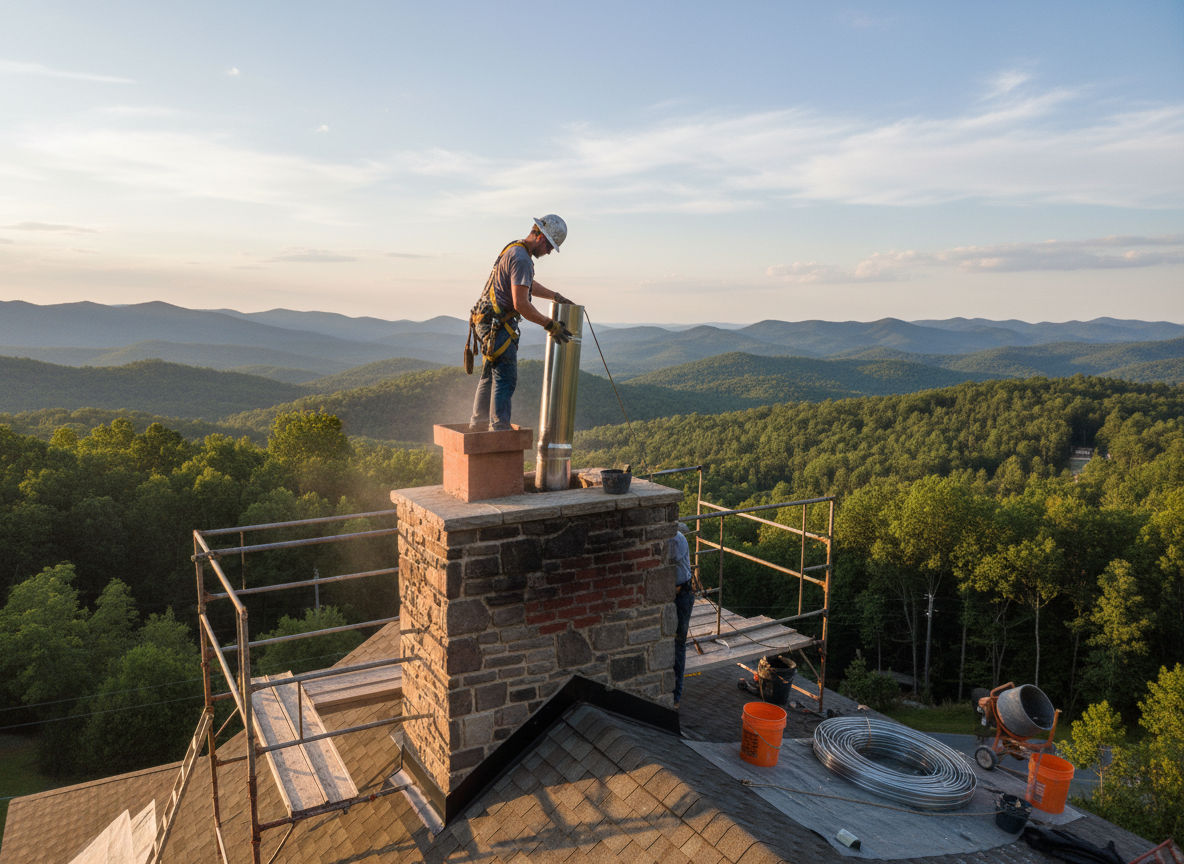
Chimney relining in Murphy addresses the wear from hot humid summers that drive moisture into masonry and the occasional severe storms that crack flue tiles. Homes in neighborhoods like Breeze Hill and Rolling Ridge often feature older brick chimneys built before modern code requirements for liners. Without a proper stainless steel or cast-in-place liner, creosote buildup accelerates and water intrusion from roof valleys near Breckinridge Park can rot framing. We match liner diameter to the appliance and existing flue size to maintain draft while meeting Collin County venting standards.
Edge cases appear when homeowners in The Pavilions or near Murphy Central Park convert fireplaces to gas inserts. The new appliance changes exhaust temperatures and can leave the original clay tile oversized, allowing condensation that eats mortar joints. Relining with a smooth-wall stainless liner restores proper velocity and prevents carbon monoxide migration into living spaces during mild winters. We always pull permits when required and verify clearances to combustibles before the liner is installed.
Terrain and soil movement in Collin County add another variable. Slight foundation shifts from expansive clay can misalign chimney stacks over time, especially on lots near Wylie or Richardson. During relining we inspect for these offsets and may recommend a flexible liner section to accommodate minor movement without cracking. This step prevents repeat service calls after the next round of thunderstorms.
Homeowners sometimes confuse basic cleaning with relining. Cleaning removes creosote but does nothing to repair damaged flue walls that allow heat transfer to wood framing. Relining is required once the flue shows spalling, gaps, or water staining visible from the top during our inspection.
Technician insight
In Murphy, the thing that catches most people out with chimney relining is how quickly humid summers push moisture through cracked tiles on homes built in the 1990s around Breeze Hill. A storm will open a gap that looks minor from the ground but lets water run straight down the flue and into the smoke chamber. We see the same offset stacks on lots near Breckinridge Park every spring because the clay soil shifts just enough to break the original tile.
Rolling Ridge Gas Insert Conversion
The homeowner had converted a wood fireplace to gas but noticed odors after rain. We found water-stained clay tiles and an oversized flue. We installed a stainless liner with insulation to restore draft and seal out moisture. The system now passes inspection and no longer leaks during storms.
How it works
- 1
Initial Inspection
We examine the chimney from roof to firebox, checking for tile damage, creosote, and water staining common after Murphy storms.
- 2
Measurement and Material Selection
Flue diameter and height are measured to select the correct stainless liner size for the appliance in use.
- 3
Liner Installation
The new liner is inserted and secured, with insulation added where needed to maintain draft in humid conditions.
- 4
Final Testing and Cleanup
Draft is verified and the work area is cleared before we leave the site.
Pricing
Cost depends on chimney height, liner type, and access in neighborhoods like Rolling Ridge; we provide upfront quotes after inspection.