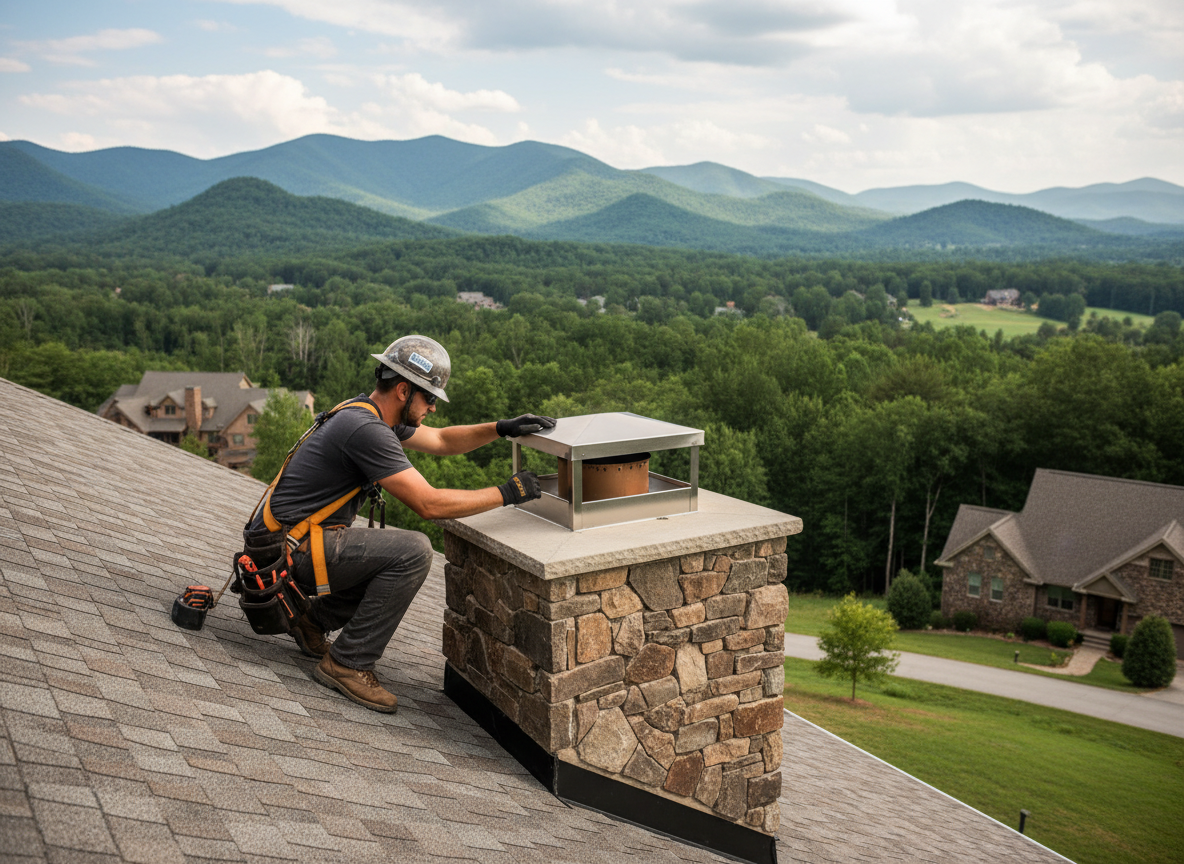
In Collin County homes across Murphy, Breeze Hill and Rolling Ridge, chimney caps must handle repeated heavy rain and high humidity that drive water down flues and accelerate creosote buildup. Older brick chimneys common in these neighborhoods often have uneven flue tiles or offset crowns that standard caps cannot seal properly, leading to interior moisture damage during mild winters when homes still run occasional fires. Proper installation requires measuring the exact flue opening and selecting a cap with a spark arrestor mesh sized to local wind loads from severe storms that sweep through from Plano and Richardson.
Terrain around The Pavilions and nearby Wylie properties frequently includes mature trees that drop debris onto caps, so we fit models with larger rain collars and secure them against uplift. Hot humid summers cause metal expansion that loosens poorly torqued fasteners, allowing water intrusion that rots framing below the crown. We use stainless steel or copper caps with riveted seams and neoprene gaskets rated for Texas temperature swings rather than thinner galvanized options that corrode within a few seasons.
Edge cases include multi-flue chimneys on larger Rolling Ridge homes where each flue needs its own cap to maintain draft balance, and caps on gas log inserts that require specific clearances to avoid CO issues. We always check for cracked clay tiles or shifting mortar before mounting, because installing over compromised masonry simply moves the leak point lower. Homeowners in Murphy often discover the problem only after ceiling stains appear following a summer thunderstorm.
Technician insight
In Murphy, the thing that catches most people out with chimney cap installation is how the combination of humid summers and occasional severe storms loosens mortar on older chimneys in neighborhoods like Rolling Ridge and The Pavilions, so a new cap alone will leak unless we address the crown first.
Storm-Damaged Cap Replacement
A homeowner in Breeze Hill noticed water stains after a summer thunderstorm. We found the existing cap had lifted and the crown mortar was cracked. We removed the old cap, repaired the crown, and installed a new stainless model with a deeper rain collar. No further leaks occurred during the next wet season.
How it works
- 1
Site Assessment
We inspect the chimney crown, flue condition and surrounding roof access from the ground and attic in Murphy homes.
- 2
Flue Measurement
Exact interior dimensions are taken to match cap size and confirm fit on older brick or metal flues common in Breeze Hill.
- 3
Cap Selection
We choose stainless or copper models with appropriate spark arrestor and rain collar for Collin County storm exposure.
- 4
Secure Mounting
The cap is fastened with corrosion-resistant hardware and sealed at the crown to prevent water entry during humid summers.
- 5
Final Check
Draft is verified and the installation is tested for stability against wind uplift before leaving the property.
Pricing
Cost depends on chimney height, number of flues and roof access; we provide upfront quotes after inspection.