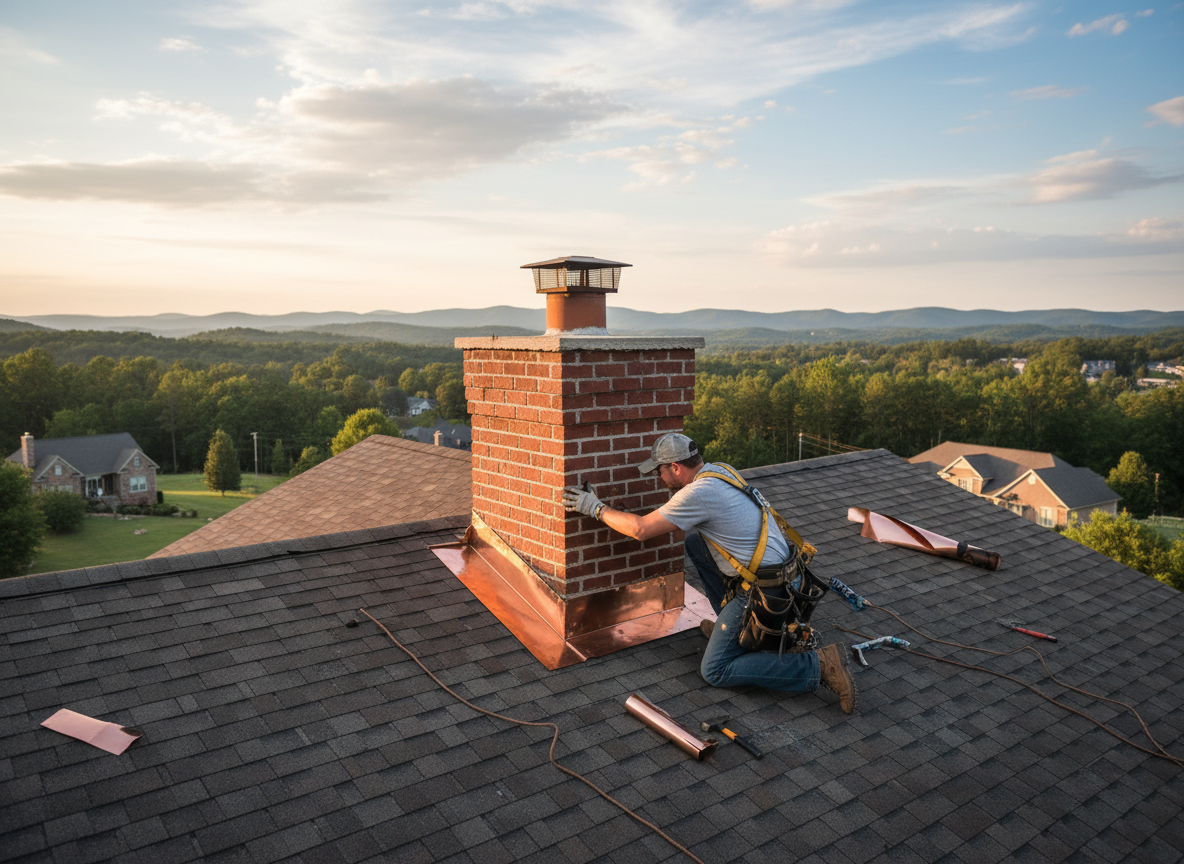
Chimney flashing in Murphy homes must handle repeated expansion from hot humid summers followed by sudden severe storms. In neighborhoods like Rolling Ridge and The Pavilions, step flashing around brick chimneys often fails where counter flashing meets the masonry because wind-driven rain forces water under the metal. We replace deteriorated lead or copper with new step and counter flashing bedded in high-temp sealant, then tie the new work into existing roof underlayment so water cannot migrate into the attic space above living areas near Breckinridge Park.
Older homes in Breeze Hill frequently show flashing separation after mild winters give way to early spring thunderstorms. The clay tile or asphalt roofs common in Collin County trap heat, accelerating sealant breakdown at the chimney corners. We inspect the cricket or saddle behind the chimney for proper slope and replace any missing or corroded flashing pieces before they allow water to reach the sheathing. This prevents the hidden rot that appears months later as stains on ceilings in Plano or Richardson commuters' houses.
Texas wind codes in Collin County require flashing to extend at least six inches up the chimney and four inches onto the roof deck. We remove loose mortar, clean the reglet, and reinstall flashing with proper overlaps so future storms do not lift the metal. Homeowners in The Pavilions often discover the problem only after water reaches second-floor drywall because the original flashing was never properly counter-flashed during roof replacements.
Technician insight
In Murphy, the thing that catches most people out with chimney flashing repair is how the combination of humid summers and sudden severe storms in Collin County makes sealant fail at the corners first on homes in Breeze Hill and Rolling Ridge; homeowners wait until ceiling stains appear instead of checking the flashing after every big wind event.
Storm-Damaged Flashing on Rolling Ridge Chimney
Heavy spring storms drove water under the step flashing on a two-story brick home in Rolling Ridge. We found the counter flashing had pulled away at two corners, allowing moisture to reach the sheathing. New copper step and counter flashing was installed with fresh sealant and the cricket slope was corrected. No further leaks appeared after the next round of thunderstorms.
How it works
- 1
Site Inspection
We examine the flashing, cricket, and surrounding roof from the ground and attic to locate every entry point created by Collin County storms.
- 2
Material Removal
Old flashing and sealant are cut out without disturbing sound masonry or roof decking in neighborhoods such as Rolling Ridge.
- 3
New Flashing Installation
Step and counter flashing are fitted, sealed, and fastened to meet local wind requirements while matching the existing roof profile.
- 4
Leak Testing
We run controlled water over the repair and check the attic to confirm no moisture reaches the interior before leaving the Murphy address.
Pricing
Pricing varies with roof pitch, chimney height, and whether the cricket requires rebuilding; we provide an upfront quote after inspection.