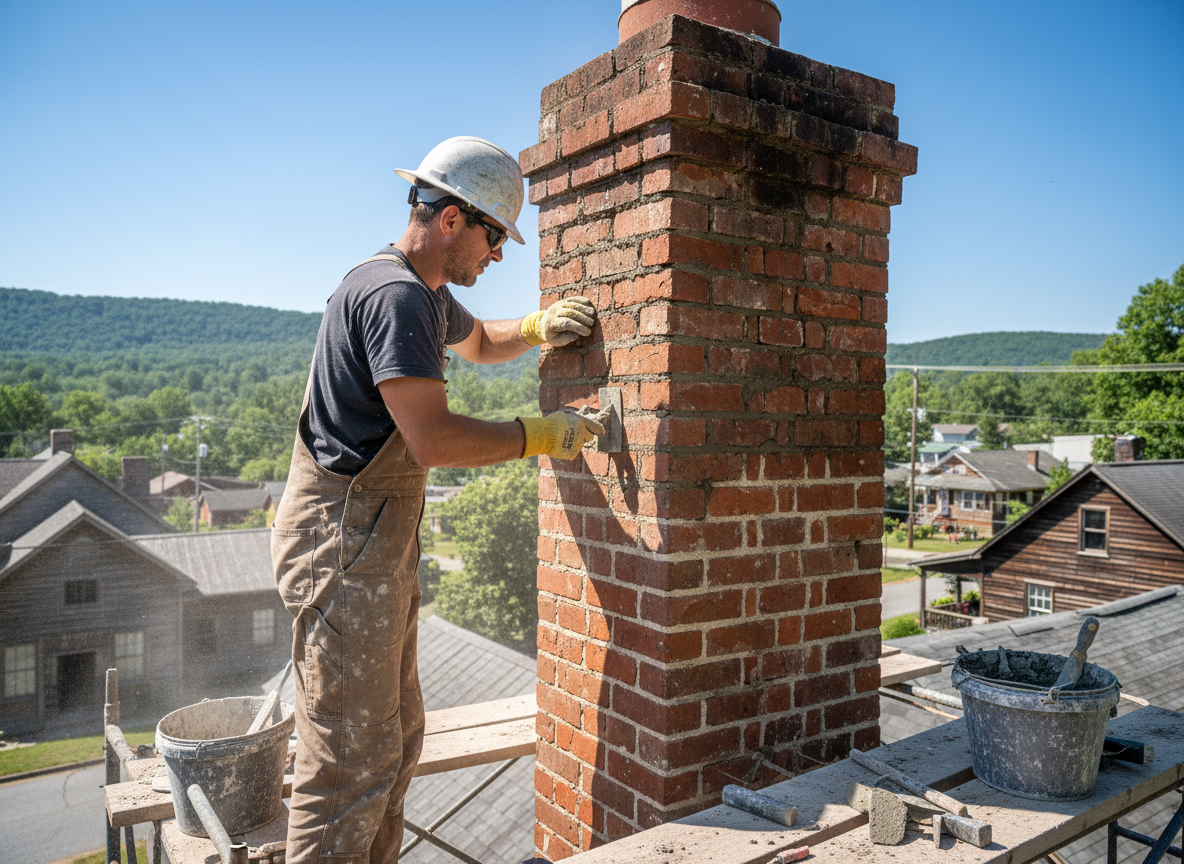
Chimney mortar in Murphy homes built through the 1990s and early 2000s often fails where lime-based joints meet modern cement repairs. Hot humid summers drive repeated expansion and contraction while occasional severe storms drive wind-driven rain deep into the flue. When water sits in the joints it leaches calcium and creates hairline cracks that widen during the next freeze cycle even in mild Collin County winters. Matching the original mortar composition prevents new spalling on the surrounding brick, especially on chimneys serving homes near Breckinridge Park where mature trees increase shade and slow drying.
Tuckpointing here requires raking out at least three-quarters of an inch of deteriorated mortar without damaging the brick faces common in Rolling Ridge and The Pavilions neighborhoods. We use pre-hydrated lime putty mixed with sharp sand to replicate the softer original joints that allow brick movement. Edge cases include parapet walls on two-story homes in Breeze Hill where wind exposure accelerates erosion and shared chimneys between townhomes that require coordinated access. After repointing we tool the joints concave to shed water and let the new mortar cure under cover for three days before full weather exposure.
Homeowners often mistake surface cracks for cosmetic issues until water stains appear on the firebox or attic sheathing. We always check the crown and flashing first because failed mortar alone rarely explains interior moisture once storms hit Murphy. Proper repair also restores draft performance on wood-burning units that see less use in the mild winters but still need clear flue paths during the humid months when creosote builds faster.
Technician insight
In Murphy the thing that catches most people out with chimney mortar repair is how our humid summers plus the occasional severe storm push water into the joints of 1990s brick chimneys in Rolling Ridge and Breeze Hill faster than homeowners expect, turning small cracks into full water intrusion before the next winter.
Mortar Failure After Storms in Breeze Hill
Heavy spring rains had driven water through cracked joints on a two-story chimney serving a home near Murphy Central Park. We found eroded mortar along the north elevation where wind exposure is highest. After raking and repointing with matched lime mortar the joints shed water properly and interior moisture stopped.
How it works
- 1
Site Inspection
We examine every joint from crown to roofline, note water intrusion paths, and test mortar hardness on chimneys serving homes in Murphy, Breeze Hill, Rolling Ridge, and The Pavilions.
- 2
Mortar Removal
Damaged material is raked out to sound substrate using hand tools to avoid brick damage common on older Collin County masonry.
- 3
Mortar Mixing and Application
We match the original lime-sand ratio, pack fresh mortar into joints, and tool them concave for water shedding.
- 4
Curing and Final Check
Joints are protected during the three-day cure period then inspected for full hardness before the homeowner resumes use.
Pricing
Upfront quotes after on-site inspection; price driven by chimney height, number of elevations, and extent of joint failure.