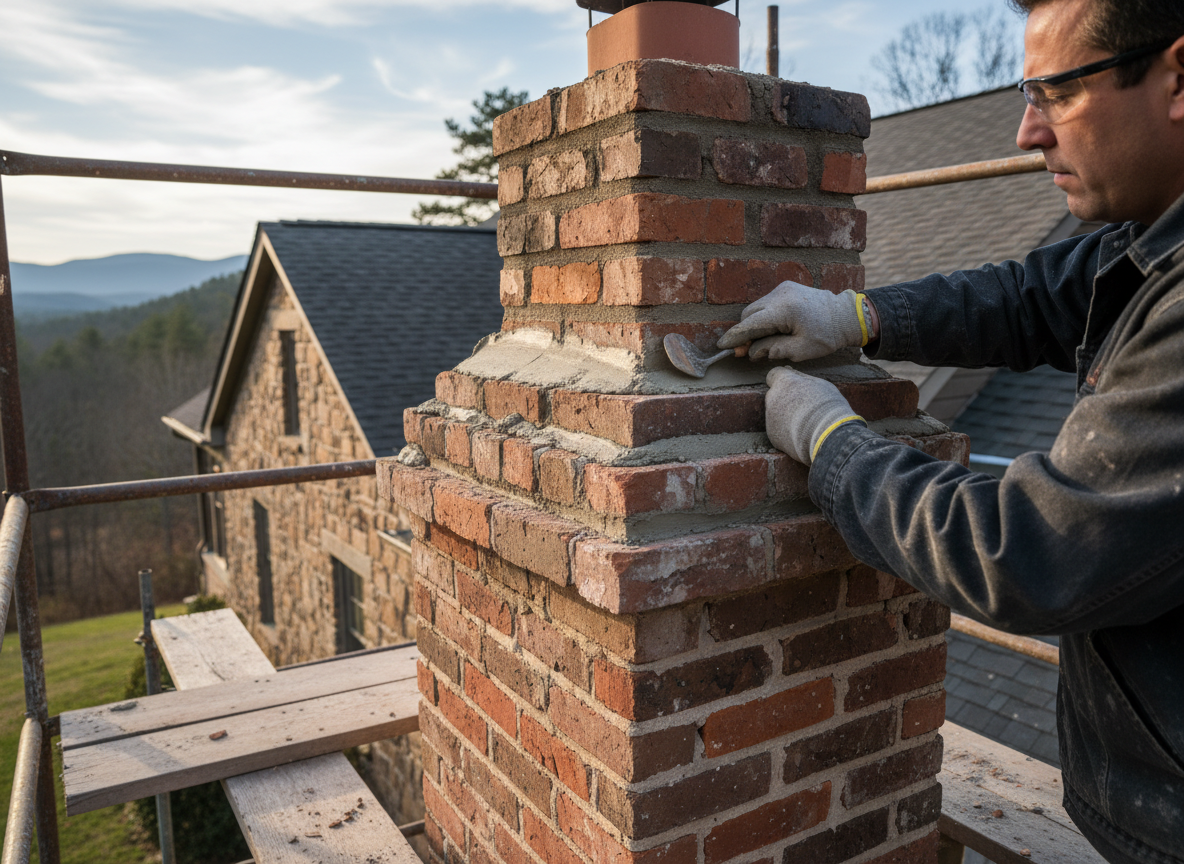
Murphy homes in neighborhoods like Breeze Hill and Rolling Ridge often feature brick chimneys installed during the 1980s through early 2000s housing boom. Hot humid summers combined with occasional severe storms accelerate mortar joint erosion, allowing water to penetrate and damage flue liners or interior walls. Tuckpointing involves cutting out failing mortar to a consistent depth then packing fresh mortar that matches the original color and strength. This work must account for Collin County soil movement that can shift foundations slightly and stress chimney stacks over time.
Technicians working in The Pavilions or near Breckinridge Park routinely inspect for hairline cracks that worsen after winter freeze-thaw cycles even though winters here stay mild. Proper tuckpointing uses Type N or S mortar formulated for exterior exposure rather than interior mixes that fail faster under humidity. Homeowners sometimes attempt DIY repairs with caulk that traps moisture behind the joint and creates larger problems later. Matching the original joint profile prevents water pooling on the chimney crown during heavy rain events common in the area.
Seasonal Timing Considerations
Tuckpointing in Murphy performs best during mild spring or fall windows before summer humidity peaks or winter storm season arrives. Scheduling around forecast severe weather prevents fresh mortar from washing out before it cures fully.
Common Edge Cases
Chimneys on homes near Wylie or Richardson borders often sit on sloped lots where runoff concentrates at the base, requiring extra flashing checks during tuckpointing to stop water migration into the firebox.
Technician insight
In Murphy, the thing that catches most people out with chimney tuckpointing is how the combination of humid summers and occasional severe storms speeds up mortar washout on south-facing sides of 1990s brick homes in Breeze Hill, especially where trees near Breckinridge Park block drying airflow.
Breeze Hill Chimney Joint Failure
Water stains appeared on an interior wall after a spring storm. Inspection revealed open mortar joints on the west face where runoff from the crown had concentrated. We removed the damaged mortar, repacked with matching mix, and added a small drip edge detail at the crown. The homeowner reported no further moisture issues the following season.
How it works
- 1
Initial Inspection
Examine all mortar joints from crown to roofline noting spalling, gaps, and water staining patterns typical after Collin County storms.
- 2
Joint Removal
Cut out damaged mortar to uniform depth without damaging surrounding brick, working section by section on Murphy chimneys exposed to daily humidity.
- 3
Mortar Mixing and Application
Prepare color-matched mortar suited to local temperature swings and pack it firmly into joints using proper tools for weather-tight results.
- 4
Finishing and Curing
Tool joints to original profile and protect the work from sudden rain or high humidity until full cure occurs.
Pricing
Cost depends on chimney height, number of sides needing work, and access difficulty in neighborhoods like Rolling Ridge; request an upfront quote for exact pricing.