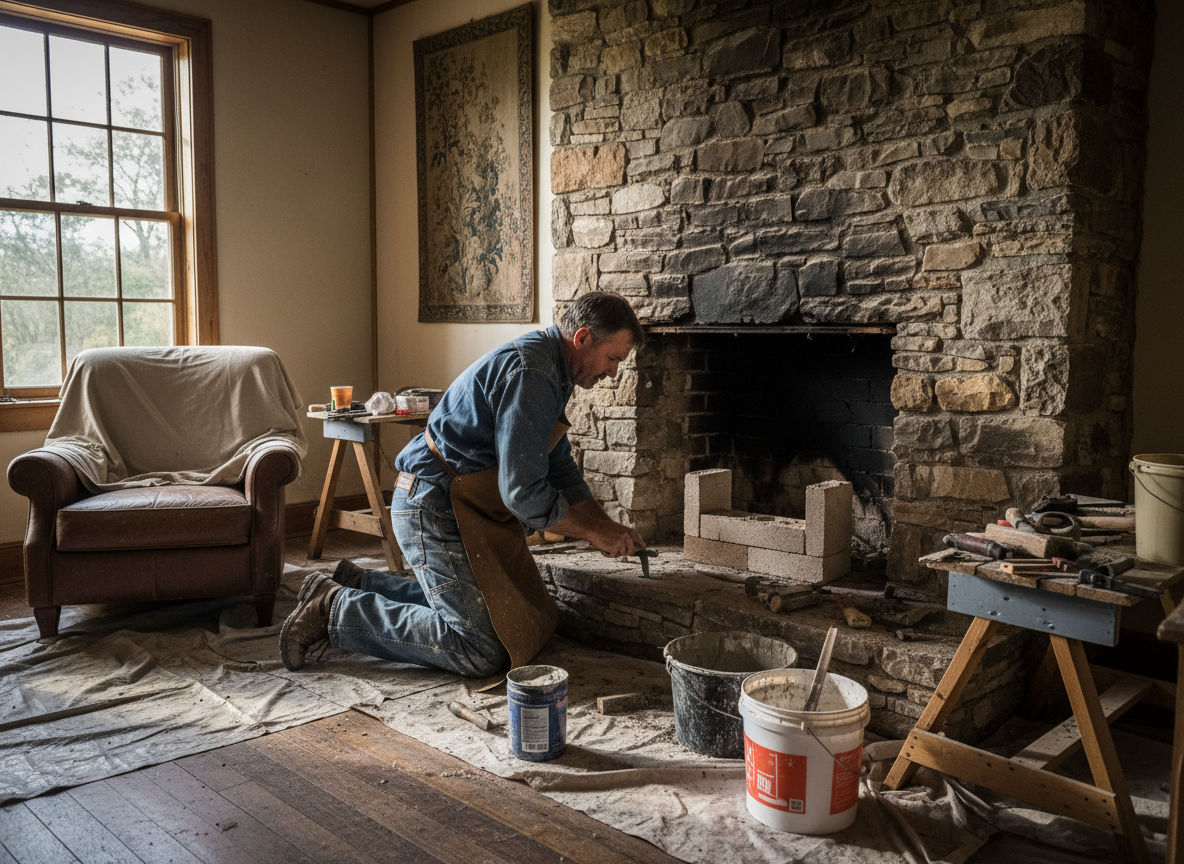
Murphy homes in neighborhoods like Breeze Hill and The Pavilions often feature masonry fireplaces exposed to hot humid summers that drive moisture into brick and mortar joints. Occasional severe storms bring wind-driven rain that accelerates spalling and flue liner cracks. Restoration begins with a full inspection of the firebox, damper, and chimney crown before addressing water intrusion points common in Collin County builds.
Mild winters mean fireplaces see less daily use but still require attention when storms hit, especially near Breckinridge Park where tree cover can funnel debris into flues. We use refractory materials matched to existing brick rather than generic patches that fail under humidity cycles. Edge cases include settling foundations in Rolling Ridge that shift hearth slabs and create hidden gaps behind the surround.
Code compliance in Murphy follows Collin County standards for combustion air and clearance, which we verify on every job. Homeowners in Plano and Richardson borders sometimes overlook shared chimney stacks on older duplexes that require coordinated repairs. We never assume standard dimensions and measure each unit because local builders used varied flue sizes through the 1990s and 2000s.
Restoration work here focuses on preventing draft failures during the first cold snap after a wet season. Proper pointing and new crown installation stop water from reaching the smoke chamber, a frequent issue when summer humidity meets winter temperature swings.
Technician insight
In Murphy, the thing that catches most people out with fireplace restoration is how summer humidity combined with occasional severe storms forces water behind the brick on homes in Breeze Hill and Rolling Ridge. The crown and flashing details from the 90s builds leak long before owners notice draft problems in mild winters. Skipping the moisture test always leads to callbacks once the first cold front hits.
Storm-Damaged Firebox in Breeze Hill
Heavy spring storms had allowed water to reach the smoke chamber of a masonry fireplace. We found cracked flue liners and deteriorated mortar joints from repeated humidity cycles. After matching refractory repairs and installing a new crown seal, the fireplace passed draft testing and remained functional through the following winter.
How it works
- 1
Initial Inspection
We examine the firebox, damper, flue, and exterior crown for storm damage and moisture signs specific to Murphy weather patterns.
- 2
Moisture Assessment
Testing identifies water entry points from severe storms common in Collin County before any repair work begins.
- 3
Material Matching
Refractory mortar and brick are selected to match the original construction found in Breeze Hill and Rolling Ridge homes.
- 4
Restoration Work
Repointing, liner repair, and crown sealing are completed with attention to local foundation settling patterns.
- 5
Final Testing
Draft and safety checks confirm proper function before returning the fireplace to service.
Pricing
Upfront quotes after on-site inspection, with costs driven by extent of storm damage and material matching needs.