Metal chimneys in Murphy homes built from the late 1980s onward often use thin-gauge stainless or galvanized liners that corrode faster under the area's hot humid summers. Moisture from frequent severe storms pools at seams and flashings, especially where attics lack proper ventilation. In neighborhoods such as The Pavilions and Rolling Ridge, tree cover around Breckinridge Park traps humidity against exterior walls, accelerating pitting on south-facing stacks. Homeowners in Collin County see leaks appear first during mild winter rains after summer expansion and contraction cycles have already stressed the joints.
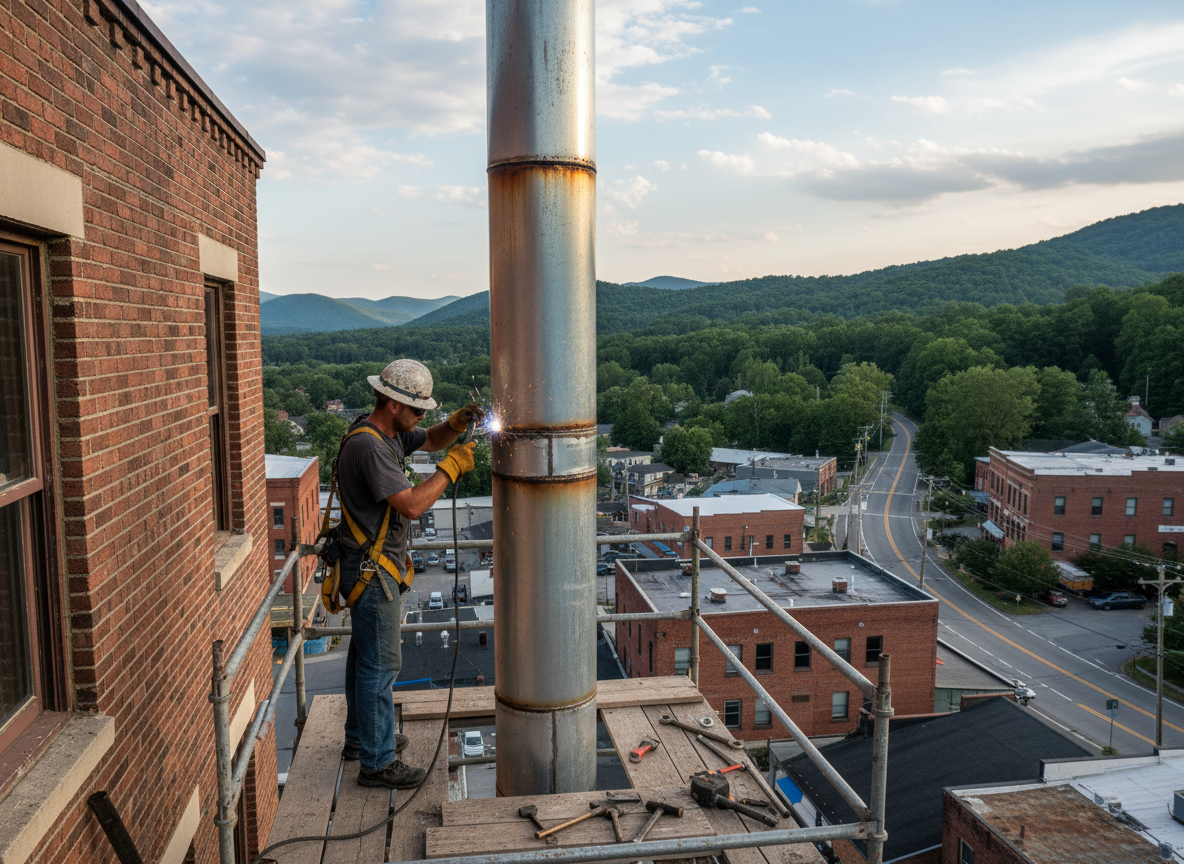
Repair work here focuses on seam welding or high-temperature sealant replacement rather than full liner swaps when the original metal retains structural integrity. Access often requires scaffolding on two-story homes near Murphy Central Park where roof pitches are steeper than in nearby Plano. We check for creosote buildup behind the metal that traps moisture against the flue and promotes hidden rust. Proper termination cap upgrades prevent wind-driven rain from Wylie-area storms from entering the chase.
Seasonal Storm Preparation
Inspect metal chimneys each spring before humidity peaks. Seal any hairline cracks at the roofline before the next round of severe weather arrives, and verify that rain caps remain secure after winter winds.
Common Edge Cases in Local Housing
Homes in Breeze Hill with additions often have offset metal flues that create extra joints prone to failure. Soil movement from occasional heavy rains can shift foundations slightly, tilting stacks and opening seams that were previously tight.
Technician insight
In Murphy, the thing that catches most people out with metal chimney repair is how our humid summers and occasional severe storms drive rust from the inside out on 1990s homes in Rolling Ridge, where attic ventilation is often inadequate and moisture lingers against the metal long after the rain stops.
Rolling Ridge Metal Flue Leak
Homeowner noticed water stains after spring storms. We found rusted seams on the offset metal flue where humidity had collected behind the chase. Welded the seams and upgraded the cap to prevent wind-driven rain entry. Draft and moisture tests confirmed the repair held through the next heavy rain.
How it works
- 1
Initial Site Assessment
Examine the full length of the metal chimney from attic to termination, noting rust locations and any storm-related dents in Murphy homes.
- 2
Moisture and Draft Testing
Use moisture meters and smoke testing to locate active leaks and confirm proper draft before any repair begins.
- 3
Seam and Joint Repair
Weld or apply high-temperature sealant to compromised seams and replace damaged flashing around the roof penetration.
- 4
Final Verification
Re-test draft and water resistance, then document the condition for the homeowner.
Pricing
Cost depends on chimney height, extent of rust, and roof access difficulty.