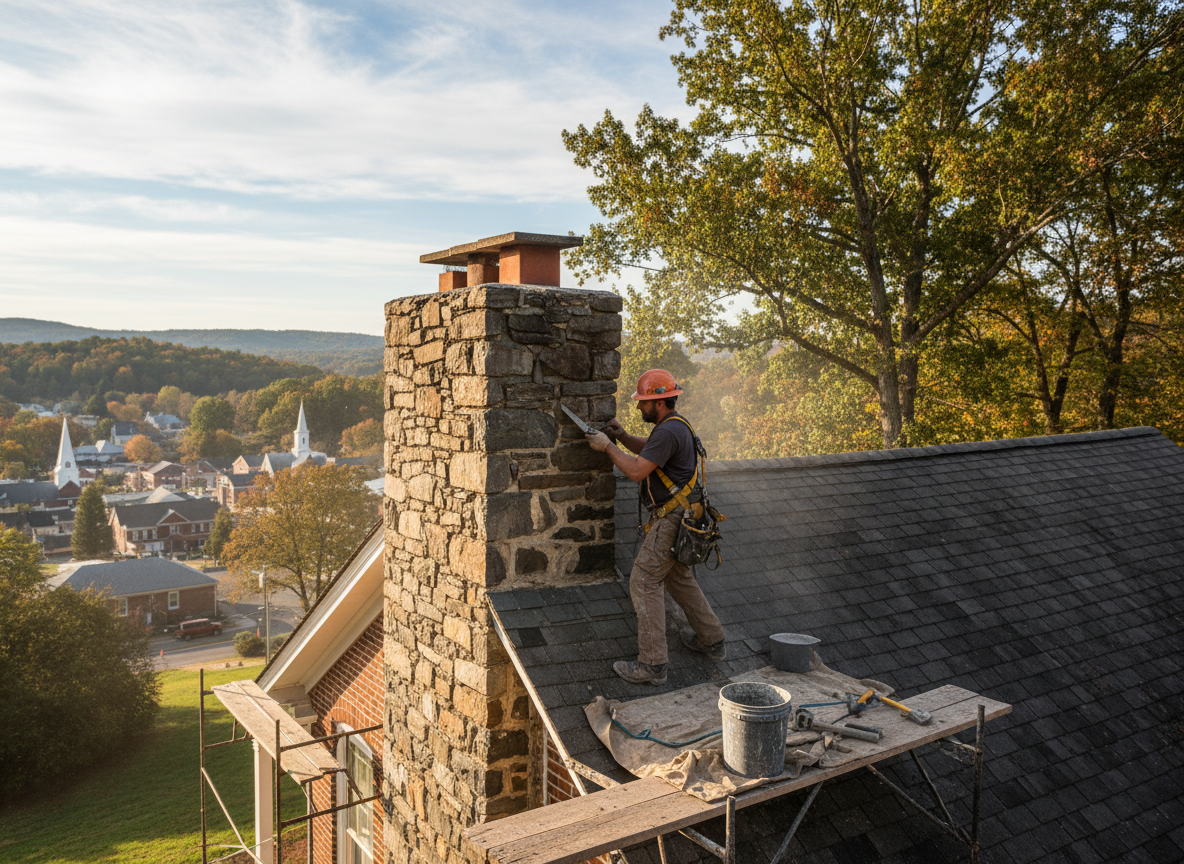
Murphy sits in Collin County where hot humid summers drive repeated expansion and contraction in masonry while occasional severe storms pound chimneys with wind-driven rain. Homes in neighborhoods such as Breeze Hill and Rolling Ridge often feature brick stacks built before modern flashing standards, allowing water to reach flue liners and accelerate spalling. Technicians at FlueCrisp Masters routinely find deteriorated crowns and cracked clay liners after these events, conditions that worsen when nearby trees at Breckinridge Park funnel gusts directly onto rooflines. Proper repair here means replacing damaged flue sections with stainless steel inserts rated for the area’s humidity rather than simple mortar patches that fail within two seasons.
Further east in The Pavilions and toward Wylie, many 1990s homes share similar two-story chimney configurations that route through attic spaces prone to condensation. The mild winters do not eliminate freeze-thaw cycles; instead, brief cold snaps after heavy rain freeze moisture trapped behind loose bricks, widening gaps that then leak during the next humid stretch. Repair work must address both the exterior tuckpointing and the interior liner to prevent carbon monoxide migration into living spaces. Crews also check for proper termination height relative to the roof pitch, a detail frequently overlooked on homes near Murphy Central Park where mature oaks create unusual draft patterns.
When storms hit Plano or Richardson borders, wind can dislodge chase covers and allow water to pool at the damper area, corroding metal components over time. Local repair protocol includes removing vegetation debris from the flue, sealing the crown with a breathable elastomeric coating, and verifying spark arrestor integrity to meet Collin County wind-load expectations. These steps prevent the rapid reappearance of efflorescence that homeowners in Murphy notice on interior walls after summer humidity returns.
Technician insight
In Murphy, the thing that catches most people out with professional chimney repair is how the combination of humid summers and occasional severe storms drives water behind the brick on 1990s stacks in Rolling Ridge and The Pavilions, rotting the flue liner from the inside long before exterior cracks show.
Post-Storm Leak in Breeze Hill
After a severe storm, a homeowner in Breeze Hill reported interior water stains near the fireplace. Inspection revealed a cracked crown and displaced flashing allowing rain to reach the clay liner. We rebuilt the crown, installed a stainless steel liner, and resealed all joints. The leaks stopped and draft improved.
How it works
- 1
Initial Assessment
Review visible damage, recent storm history, and home location within Murphy neighborhoods to determine likely water entry points.
- 2
Detailed Inspection
Climb and examine crown, flue liner, flashing, and masonry joints while checking for condensation issues common in Collin County humidity.
- 3
Targeted Repair
Replace compromised sections with appropriate liners and tuckpoint bricks using materials suited to local freeze-thaw and storm exposure.
- 4
Final Verification
Test draft, confirm no active leaks, and document work for the homeowner before leaving the site.
Pricing
Upfront quotes follow on-site inspection because damage extent and liner condition vary widely by property age and storm exposure.