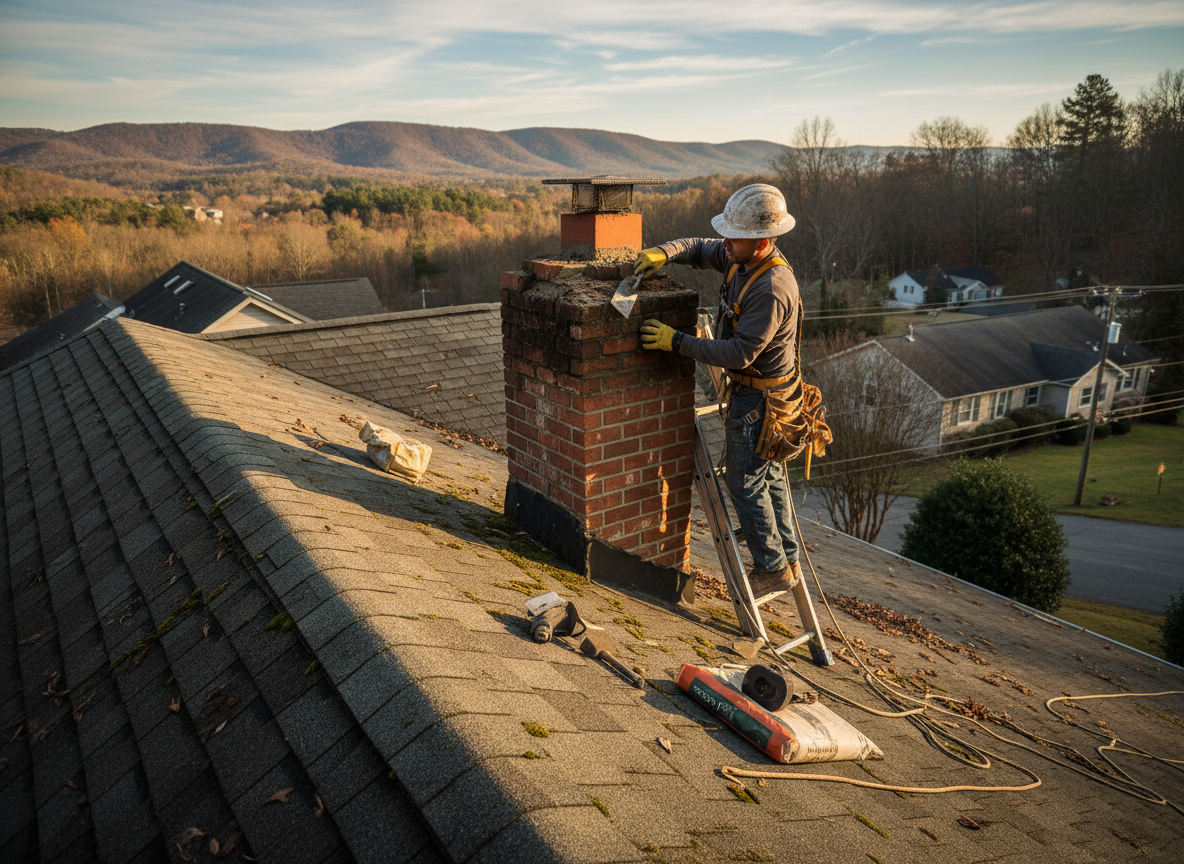
Murphy homes in neighborhoods like Breeze Hill and Rolling Ridge often see roof chimney problems after the area's occasional severe storms. High winds and heavy rain can lift or crack the flashing where the chimney meets the roof, allowing water to enter the attic. Hot humid summers accelerate wear on mortar and sealant around the crown, especially on houses near The Pavilions where tree cover delays early detection of moisture.
Repair work here requires careful roof access and attention to how Collin County building practices integrate chimneys with asphalt shingles common in Murphy subdivisions. Technicians check for hidden rot in sheathing beneath the flashing and ensure any new materials match the existing roof slope to prevent future ponding. Mild winters mean less freeze-thaw damage than farther north, but sudden temperature swings during storms can still loosen caps and crown seals.
Homeowners in nearby Plano and Richardson frequently call after noticing interior stains because the initial leak point sits several feet from the chimney itself. Proper repair includes resealing the crown with appropriate refractory materials and reinstalling step flashing that integrates with the roof underlayment. Skipping the underlayment tie-in is the most common shortcut that leads to repeat calls during the next heavy rain.
Work in Wylie and Murphy also accounts for soil movement from the region's clay-heavy ground, which can shift roof lines slightly over time and stress chimney connections. Every job starts with a full roof-level inspection rather than a quick ground view so hidden issues like displaced flashing or cracked bricks are caught before they worsen.
Technician insight
In Murphy, the thing that catches most people out with roof chimney repair is how severe storms push water under the flashing on homes in Rolling Ridge, where the clay soil shifts roof lines just enough to open small gaps that ground-level checks miss until attic stains appear.
Flashing Failure After Storm in Breeze Hill
A homeowner in Breeze Hill noticed ceiling stains following a severe storm. Inspection showed lifted flashing and water tracking down the chimney exterior. We replaced the step flashing, resealed the crown, and tied everything back into the roof underlayment. The leaks stopped and no further interior damage occurred.
How it works
- 1
Roof-Level Inspection
Access the roof to examine flashing, crown, and surrounding shingles for storm damage and moisture intrusion.
- 2
Damage Assessment
Identify failed seals, loose flashing, or crown cracks and note how local weather patterns contributed.
- 3
Targeted Repair
Replace or reseal flashing, repair the crown, and restore water-tight integration with the roof deck.
- 4
Final Check and Cleanup
Test for leaks with water and confirm the chimney functions safely before leaving the site.
Pricing
Upfront quotes provided after on-site inspection; final cost depends on roof access and extent of storm damage.